Sperma Occurrat Ova
by : Bañez, Caperlac, Furiscal, Mantuano, Plantilla
introduction
Back in my childhood days, I tend to ask my parents how I was made. As I grow older, I start to understand what my parents explained to me when I was younger. Thanks to our Science class, it helped me further understand how human beings are made. So in this blog, I will explain the journey of the sperm and the egg cell.
process
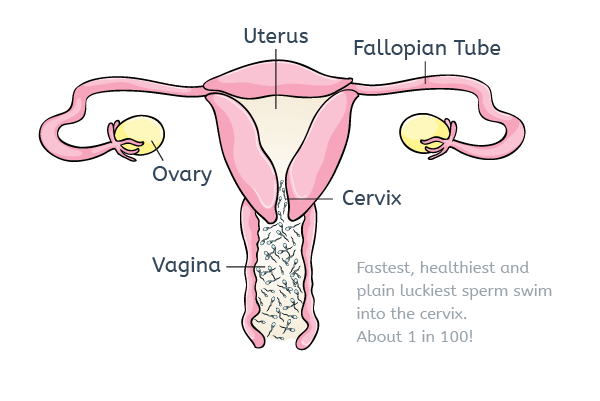
Based on what I have learned and according to my research, the journey begins with millions of sperm cells that are released into the female reproductive tract during intercourse. The sperm cells gain their full ability when they are ejaculated into the reproductive tract. Upon ejaculation, 40 to 150 million sperm may be contained in the fluid. The sperm cells are enclosed in a fluid called seminal plasma or semen, which is a mix of fluids from the testes, seminal vesicles, prostate, and the bulbourethral glands. The fluid contains elements which protect the sperm cells during their journey towards the egg. The time it takes for the sperm to reach an egg is very variable; some may reach their target in half an hour, while others may take days. The semen thickens and helps the sperm cells stay inside the woman as close as possible to the cervix, which is the “gate” to the egg.
only the strongest sperm cells will make it this far
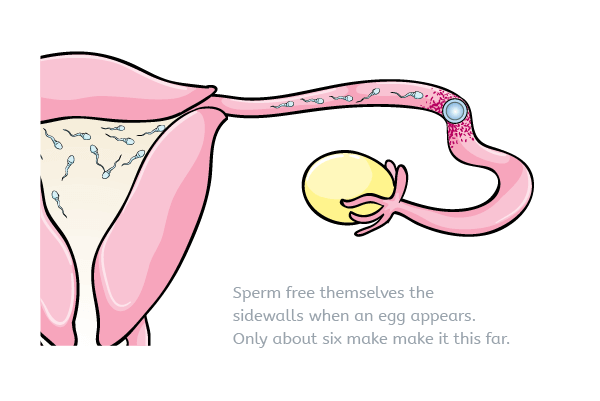
Liquid extends from the cervix, allowing the sperm cells from the semen to swim into the cervix. Since vagina is acidic, the sperm cells that enters the female’s reproductive tract has 48 hours to live so they really need to survive for them to reach the egg. The fastest swimmers may find the egg in as little as 45 minutes. It can take the slowest up to 12 hours. But, if the sperm don’t find an egg in the fallopian tubes at the time of intercourse, they can survive inside for up to 7 days. That’s why only the strongest sperm cells will make it this far. Out of the millions of sperm cells deposited during intercourse, only a few have the potential to reach the fallopian tubes.
only about 1 in 100 of the sperm ejaculated into the vagina will ever make it into the relative safety of the cervix
From there, they’ll travel through the cervical canal into the uterine cavity and then into the fallopian tubes. The sperm finally near the egg and push towards its shell called the zona pellucida. This triggers the acrosome reaction, in which enzymes of the acrosome are freed. These enzymes then begin to digest the zona pellucida and allow the sperm to tunnel toward the egg’s plasma membrane. Sperm cells follow signals (a process called chemotaxis) from the supportive cells called the cumulus cells of the egg. When the sperm cell’s head is inside the egg, the tail of the sperm is detached and at that moment, the zona pellucida becomes impermeable to other sperm cells. A lot of sperms will bind to this shell, but only 1 will be allowed to go all the way through to reach the egg inside. About 10,000 sperm will reach the tubes and this can take up to two hours since the sperm are so tiny.
end
Now that I’ve explained the journey of the sperm and the egg cell, have you learned something? Does all your questions back in your childhood days have been answered? I’m beyond happy that I could share this information with you, guys and give you more knowledge about this. Hoping that this blog helped you a lot in terms of your curiosity and may you share it with your friends too!
follow our blog for more interesting topics
Let us know your thoughts!
 Site Title
The questions I had from childhood were finally answered thanks to your blog! 🙂 The process of fertilization is truly interesting. We’re really lucky to be given the gift of life. Nice blog! 🙂
LikeLike
The article was very well written, the content has broadened my knowledge upon the subject and the design is pleasing to the eyes. I hope you continue this kind of content – Maxine Ansaldo
LikeLike